The Distributed Intelligence Frontier
Synergizing Cloud & Edge
A perspective on how distributed intelligence across cloud and edge will redefine next-generation digital infrastructure — and how enterprises can build scalable, real-time systems for the AI-driven world
1. Redefining the Computing
The global digital infrastructure is entering a new phase of evolution. For more than a decade, cloud computing has been the foundation of modern digital systems, enabling scalable platforms for storage, processing, and analytics. However, the rapid growth of data generated by connected devices, autonomous systems, and AI-driven applications is exposing the limitations of a purely centralized model.
As billions of devices generate data that must often be processed in real time, computing is evolving toward a distributed intelligence model, often described as the computing continuum, where intelligence is distributed across edge devices, regional infrastructure, and centralized cloud platforms. Advances in semiconductor technologies and the emergence of next-generation networks such as 5G-Advanced and future 6G systems are accelerating this shift.
Drawing on its expertise across telecommunications systems, embedded platforms, and cloud-native SaaS architectures, Trisentrix explores in this paper how the computing continuum is emerging as a foundational architecture for the next generation of intelligent digital infrastructure.
2. Redefining the Computing Continuum
To understand this shift, we must first define the interplay between the Cloud and the Edge. Cloud computing, as defined by the International Organization for Standardization (ISO), is a paradigm for enabling network access to a scalable, elastic pool of shareable resources with self-service provisioning. It is characterized by multi-tenancy and the abstraction of physical hardware.
In contrast, edge computing is a distributed model that moves computation and data storage closer to the source of data generation. This "edge" is not a single location; it is a spectrum encompassing everything from resource-constrained IoT sensors and specialized gateways to robust micro-data centres situated near the user. The primary objective is localization: processing data in proximity to its origin to minimize the physical and logical distance it must travel.
This shift is not a replacement for the cloud but a strategic extension of it. By forming a synergistic ecosystem, organizations can perform filtering, aggregation, and real-time decision-making at the edge, while reserving the central cloud for long-term storage, batch analytics, and complex model training.
The computing continuum refers to a seamless, integrated environment where data processing and storage happen across a distributed network of resources.
Instead of treating the Cloud, the Edge, and local devices as separate silos, the computing continuum views them as a single, fluid infrastructure. This allows applications to automatically move tasks to the best possible location based on needs like speed, power consumption, or data privacy.
3. Architecture of the Computing Continuum
To understand the continuum, it helps to see how data moves through these stages:
- The Edge (Devices): This is where data is born. It includes IoT sensors, smartphones, and industrial machines. Processing here is nearly instantaneous (low latency) but has limited power.
- Far/Near Edge: These are micro-datacenters or "fog nodes" located close to the user (like a 5G base station). They offer more power than a device but are faster than the Cloud.
- The Cloud: The massive, centralized datacenters (like Google Cloud or AWS). This is where the heaviest processing and long-term storage happen, though it takes longer for data to travel here.
4. Why the Computing Continuum Matters
As we move toward technologies like autonomous vehicles and smart cities, we can no longer rely on a "Cloud-only" model.
Latency and Real-Time Response: Applications such as autonomous vehicles, industrial robotics, and augmented reality (AR) require sub-millisecond response times. E.g. A self-driving car cannot wait for a Cloud server to respond before it decides to brake; that processing must happen at the Edge. Edge computing enables immediate local action.
Bandwidth Optimization: Transmitting the raw data from billions of sensors would overwhelm even the most robust wide-area networks (WAN). E.g.: Sending terabytes of raw video from thousands of city cameras to the Cloud is expensive and slow. . The continuum allows for "filtering" data at the Edge and only sending what's important to the Cloud, thereby significantly reducing congestion and egress costs.
Data Sovereignty and Privacy: In a landscape defined by strict regulations like GDPR and CCPA, keeping sensitive data localized provides a layer of protection. Processing and anonymizing data at the edge ensures that sensitive information never leaves the local environment.
Operational Resilience/Reliability: In remote or harsh environments where connectivity is intermittent—such as offshore oil rigs or rural smart farms—the computing continuum ensures the local edge node runs the functions autonomously, ensuring business continuity even when the link to the cloud is severed.
To Summarize,
| Feature | Edge Computing | Cloud Computing | Computing Continuum |
|---|---|---|---|
| Location | Close to the user | Centralized datacenters | Everywhere (Distributed) |
| Speed | Extremely fast | Slower (Network delay) | Optimized based on task |
| Capacity | Low | Massive | Flexible and Scalable |
| Perspective | A local "island" | A distant "hub" | A single, unified system |
5. AI and IoT in the Computing Continuum
In the world of AI and the Internet of Things (IoT), the computing continuum is the "nervous system" that makes complex automation possible.
Instead of an AI model living only in a giant data centre (the Cloud), it is broken down and distributed across the network to solve real-world problems in real-time.
AI models are often too large to run on a tiny sensor but too slow if they stay in the Cloud. The continuum solves this using a split-intelligence approach:
- On-Device (Edge AI): Performs "light" AI tasks like detecting motion or recognizing a wake word (e.g., "Hey Siri"). This requires zero latency and works without the internet.
- The Fog/Near Edge: A local server handles more complex AI, like analysing video feeds from 10 different cameras at once to track a person through a building.
- The Cloud: This is the "brain." It takes the data collected by thousands of devices over months to train and retrain the AI models, which are then pushed back down to the Edge.
6. Benefits for AI and IoT
- Offline Capability: Your smart home or factory keeps working even if the ISP goes down.
- Privacy: Sensitive data (like faces or voices) can be processed locally and deleted, rather than being sent to a central server.
- Cost Efficiency: It is much cheaper to process 1TB of video at the Edge than to pay for the bandwidth to stream it to the Cloud.
7. Understanding the Continuum Architecture
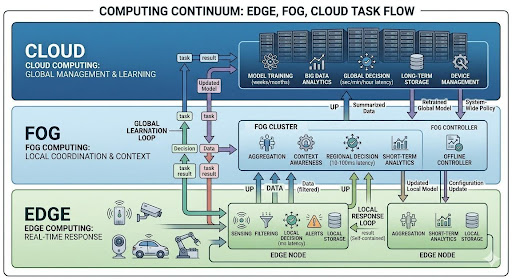 Figure 1: Computing Continuum Architecture Illustration
Here is how you can read the flow of tasks, decision-making, and results in this generic architecture:
1. The Data Flow (Bottom-Up)
Data is generated at the Edge by sensors, cameras, and devices (e.g., smart cars, robotic arms).
Edge Layer: The primary job here is sensing and filtering. The initial "Edge Node" performs the fastest processing (milliseconds). It can generate a Local Response Loop (like an immediate shutdown alert). Any data deemed significant, but not immediately critical, is filtered and passed 'UP'.
Fog Layer: Filtered data from multiple edge nodes is received and aggregated. The Fog layer adds context awareness. It processes data in 10-100ms. If the factory’s regional power grid spikes, the Regional Decision to throttle a specific line happens here, which sends a control command (like a 'Configuration Update') back 'DOWN'.
Cloud Layer: Summarized data (e.g., daily productivity or optimized machine settings) flows to the Cloud. The Cloud manages the entire continuum and provides the longest-term perspective. It handles Big Data Analytics and, most importantly, Model Training.
2. The Decision and Result Flow (Top-Down)
This flow closes the loop, allowing intelligence developed at the top to optimize operations at the bottom.
- The Cloud develops sophisticated intelligence. For example, it trains an AI model based on data from 50 global factories. This Updated Model is pushed 'DOWN' to the Fog layer.
- The Fog layer receives the new intelligence (e.g., an Updated Local Model), applies it to regional context, and pushes refined commands further 'DOWN'.
- The Edge Node receives the updated model. Now, its Local Decision-Making becomes slightly smarter and more accurate for future tasks.
3. Key Differentiators Shown in the Image
- Latency: Note how the time for a decision decrease dramatically as you move down the continuum (from hours in the Cloud, to milliseconds at the Edge).
- Autonomy: The diagram shows how a Fog cluster or Edge node can operate a "Self-contained" loop, allowing it to function even if the connection to the layer above is temporarily lost (offline autonomy).
- Scope: The Cloud sees everything (Global); the Fog sees a region or specific assembly line; the Edge sees only a single machine or sensor (Local).
8. Final perspective
The evolution from centralized cloud architectures to a distributed computing continuum marks a pivotal transformation in the digital era. By combining the scalability and computational power of cloud infrastructure with the immediacy and responsiveness of edge computing, organizations can unlock unprecedented capabilities in artificial intelligence, automation, and real‑time analytics.
As emerging technologies such as autonomous systems, smart cities, and immersive digital experiences continue to mature, the ability to process data closer to where it is generated will become a defining advantage. Advances in semiconductor innovation, networking architecture, and distributed AI models will further strengthen this paradigm.
Looking toward the future of 5G‑Advanced and the transition toward 6G ecosystems, the computing continuum will serve as the foundational infrastructure enabling resilient, intelligent, and scalable digital systems. Enterprises that strategically integrate edge, fog, and cloud layers into a cohesive architecture will be best positioned to harness the full potential of next‑generation intelligent networks.
Implementing these systems requires expertise across multiple technology layers. Trisentrix brings together capabilities across telecommunications, embedded systems, cloud platforms, and SaaS-based application architectures to help organizations design and deploy distributed intelligence solutions.
Through its combined expertise in edge-aware software platforms, cloud-native infrastructure, and domain-specific customization, Trisentrix enables businesses to build scalable systems that process data closer to the source while leveraging the cloud for advanced analytics and AI model development. This integrated approach allows organizations to accelerate innovation, optimize operational efficiency, and unlock the full value of real-time data across the computing continuum
9. About Trisentrix
Trisentrix is a technology company focused on enabling next-generation distributed computing systems across cloud and edge environments. With expertise spanning telecommunications infrastructure, embedded systems, cloud platforms, and Software-as-a-Service (SaaS) architectures, Trisentrix helps organizations design and deploy intelligent digital solutions tailored to modern data-driven environments.
By combining deep technical capabilities in cloud-native platforms, edge computing, and customized SaaS solutions, Trisentrix supports enterprises in building scalable systems that enable real-time insights, intelligent automation, and resilient digital infrastructure